Derby County FC : Swansea City AFC
0:3 (0:2)
EFL Championship
Pride Park Stadium
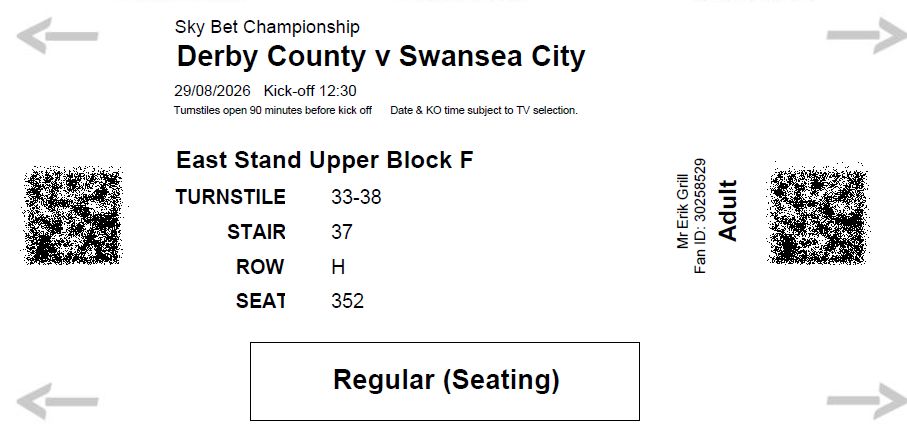
Ticket & Statistics
| Ball Possession | : | ||
| Shots Total | 8 | : | 23 |
| Shots Off Goal | 2 | : | 5 |
| Goalkeeper Saves | 9 | : | 0 |
| Corner Kicks | 5 | : | 6 |
| Free Kicks | 7 | : | 16 |
| Fouls | 16 | : | 7 |
| Offsides | 5 | : | 4 |
| Shots On Goal | 6 | : | 18 |
As we discovered, the train services from London to the East Midlands are ideal for groundhopping trips. We took advantage of this opportunity to go and watch a match in Derby. Derby lies at the foot of the River Derwent and, with its Silk Mill, is part of the UNESCO World Heritage Site ‘Derwent Valley Mills’.
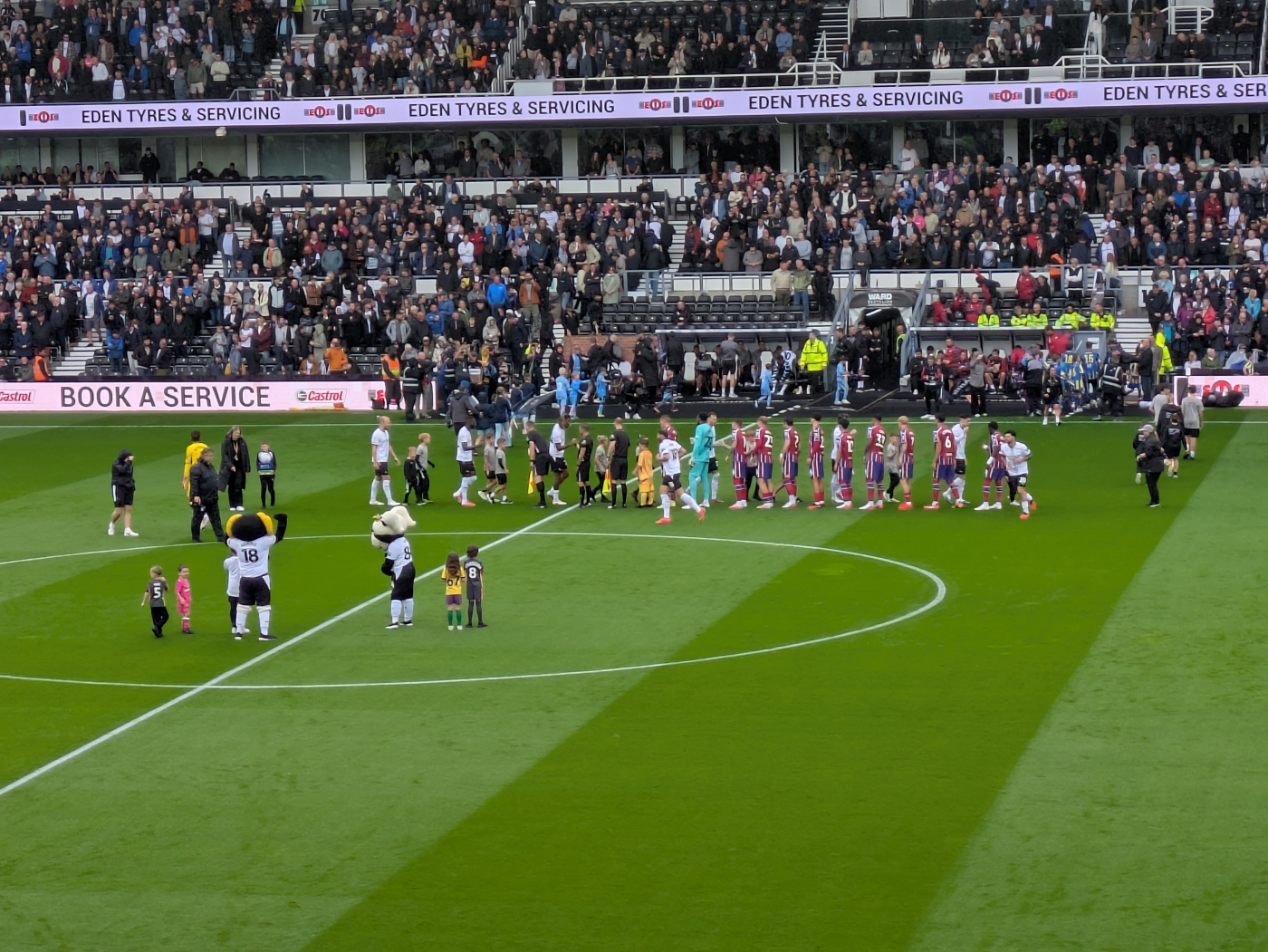
The match on the programme was the Championship fixture between Derby County and Swansea City. Derby County was a founding member of the English Football League in 1888. Derby enjoyed its greatest successes in the 1970s, winning two league titles. They won their first title in 1972 under manager Brian Clough. The following season, they were only beaten by Juventus in the semi-finals of the European Cup.
A statue of Brian Clough now stands outside Pride Park Stadium, commemorating this successful era. Clough subsequently went on to manage Nottingham Forest, with whom he won the league title in 1978 and the European Cup in 1979 and 1980. The road between Derby and Nottingham was renamed Brian Clough Way in 2005. Between these successful spells, he was also appointed manager of Leeds United. However, this spell was not particularly successful. The reasons for this are complex and were made into a film in 2009 entitled ‘The Damned United’.
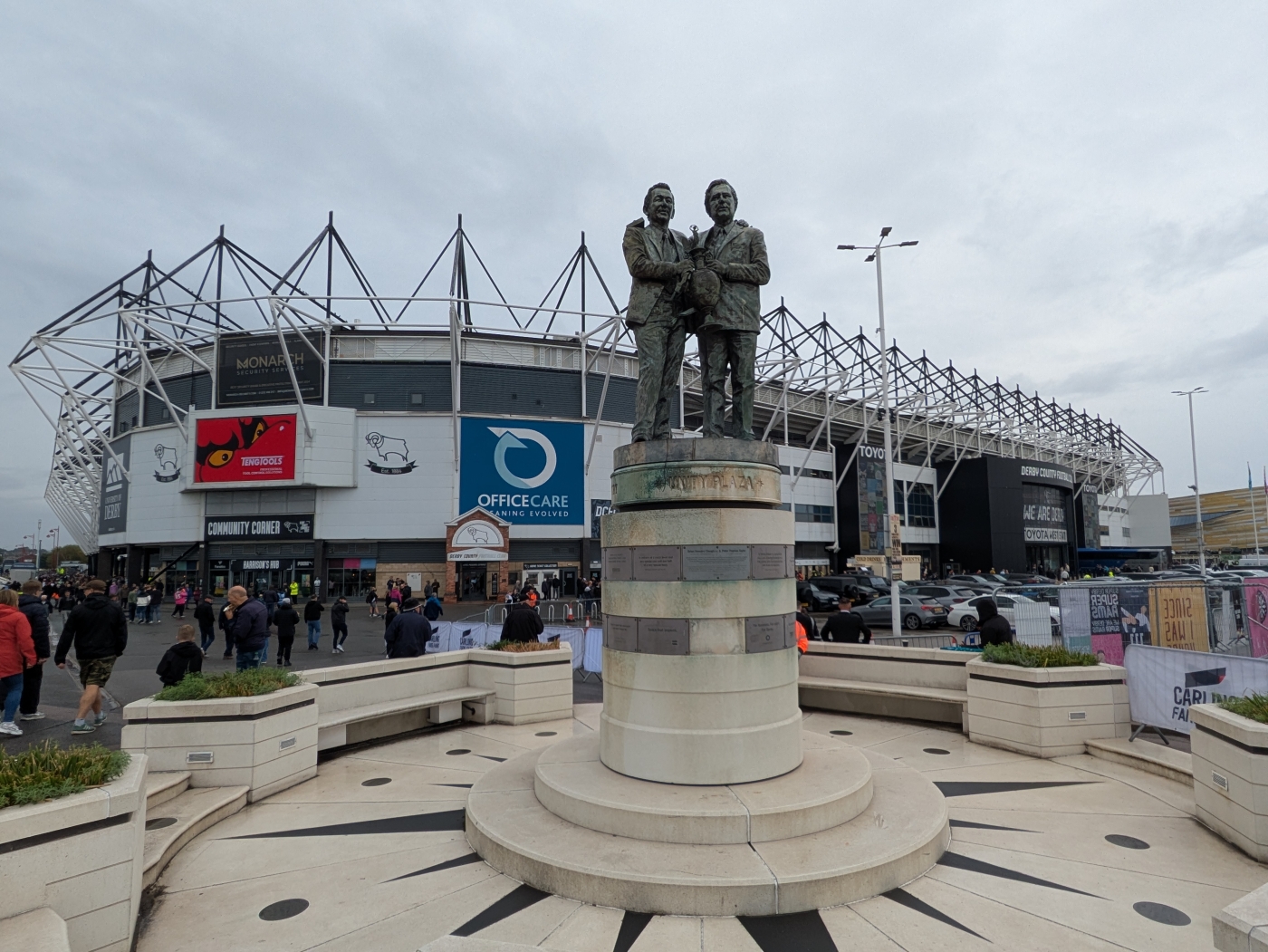
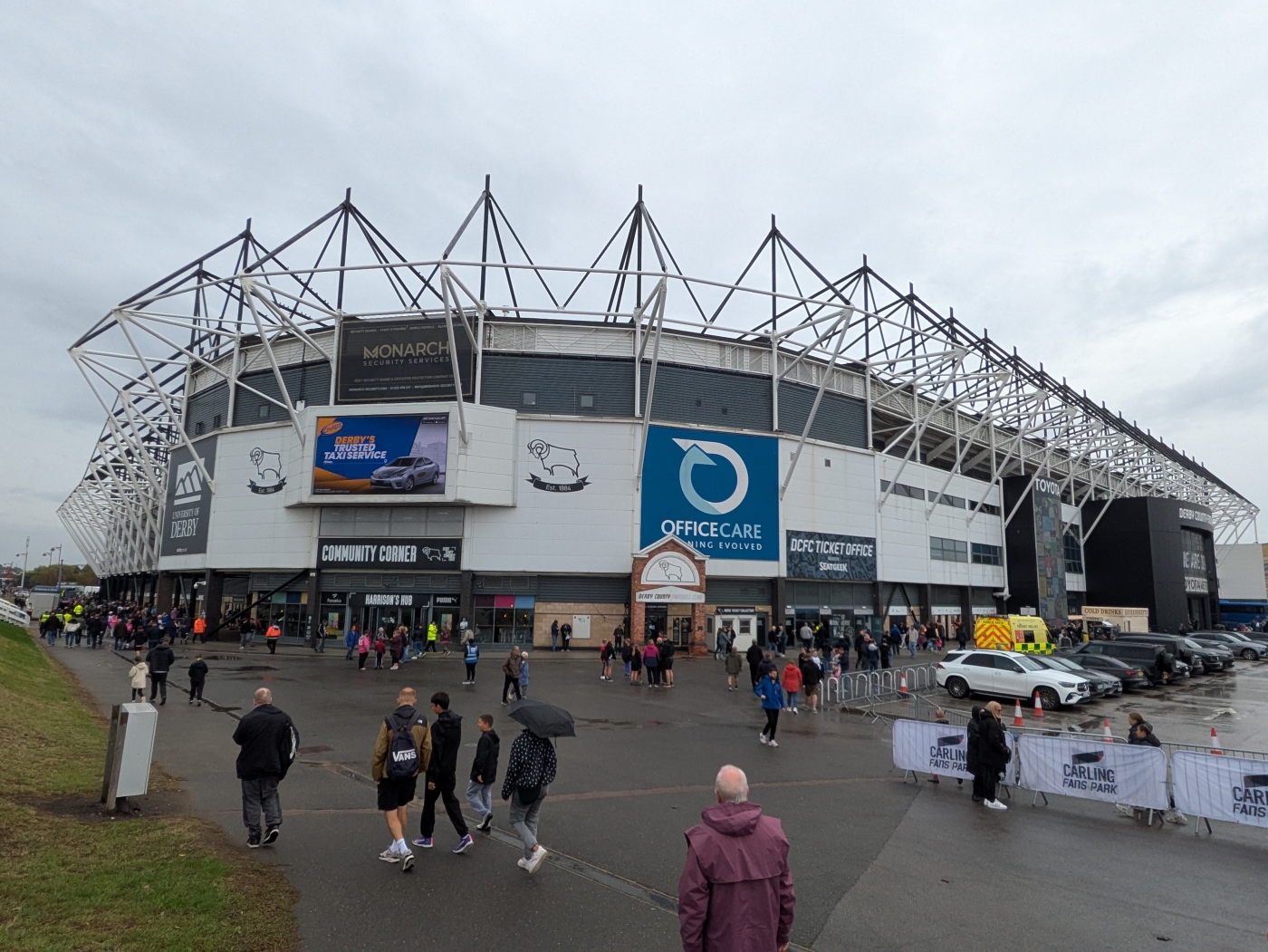
Although the walk from the station to the stadium is short, the weather was, unfortunately, rather typically British. As the weather in London had looked a bit better, we were rather ill-prepared for these conditions. Thank goodness there was a Sports Direct right opposite the stadium, and we were able to rectify this sartorial faux pas with a few bargains. We’d actually intended to stock up at the fan shop, but couldn’t find one at the stadium. Afterwards, we enjoyed a tasty stadium sausage before heading into the stadium.
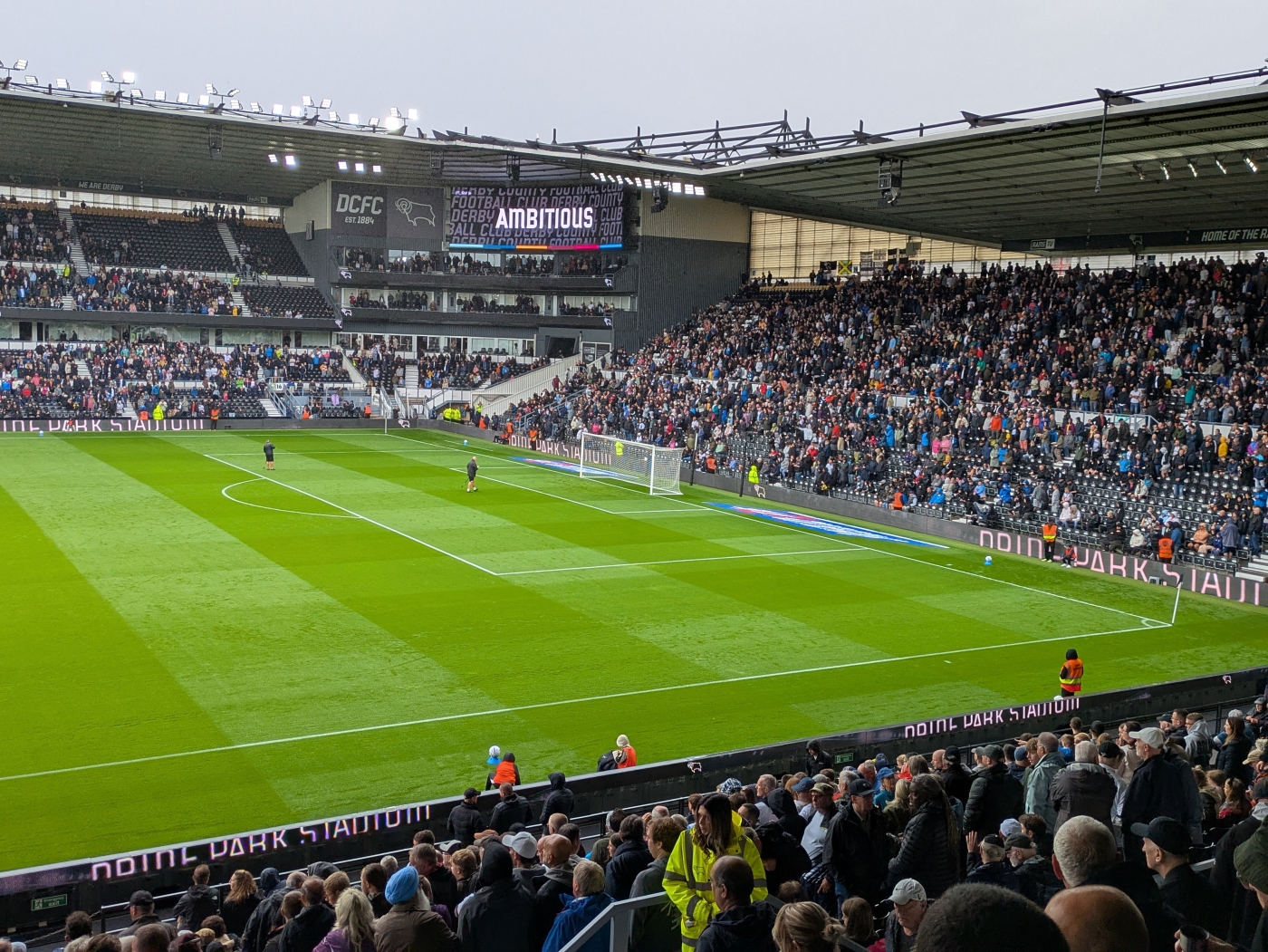
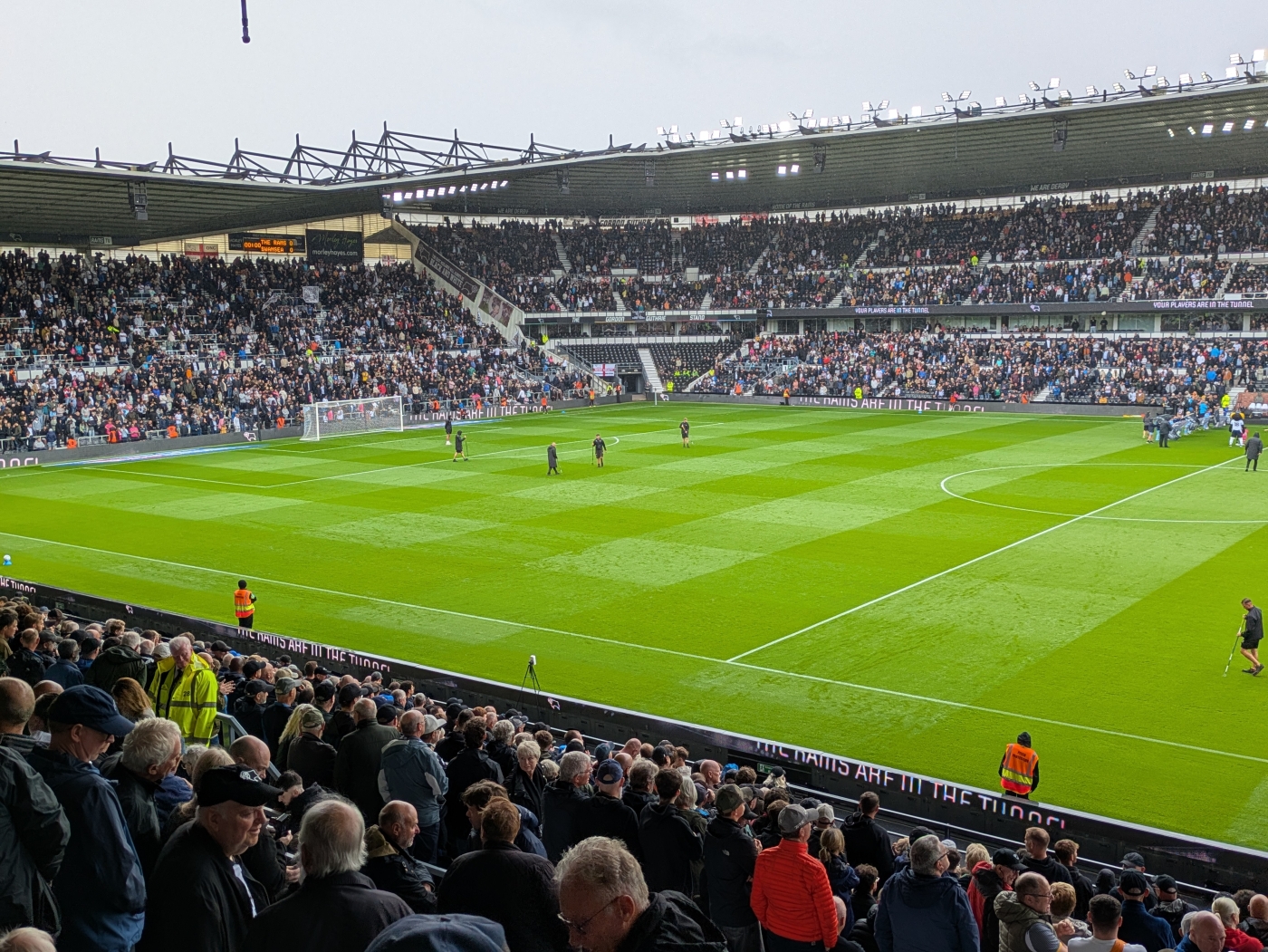
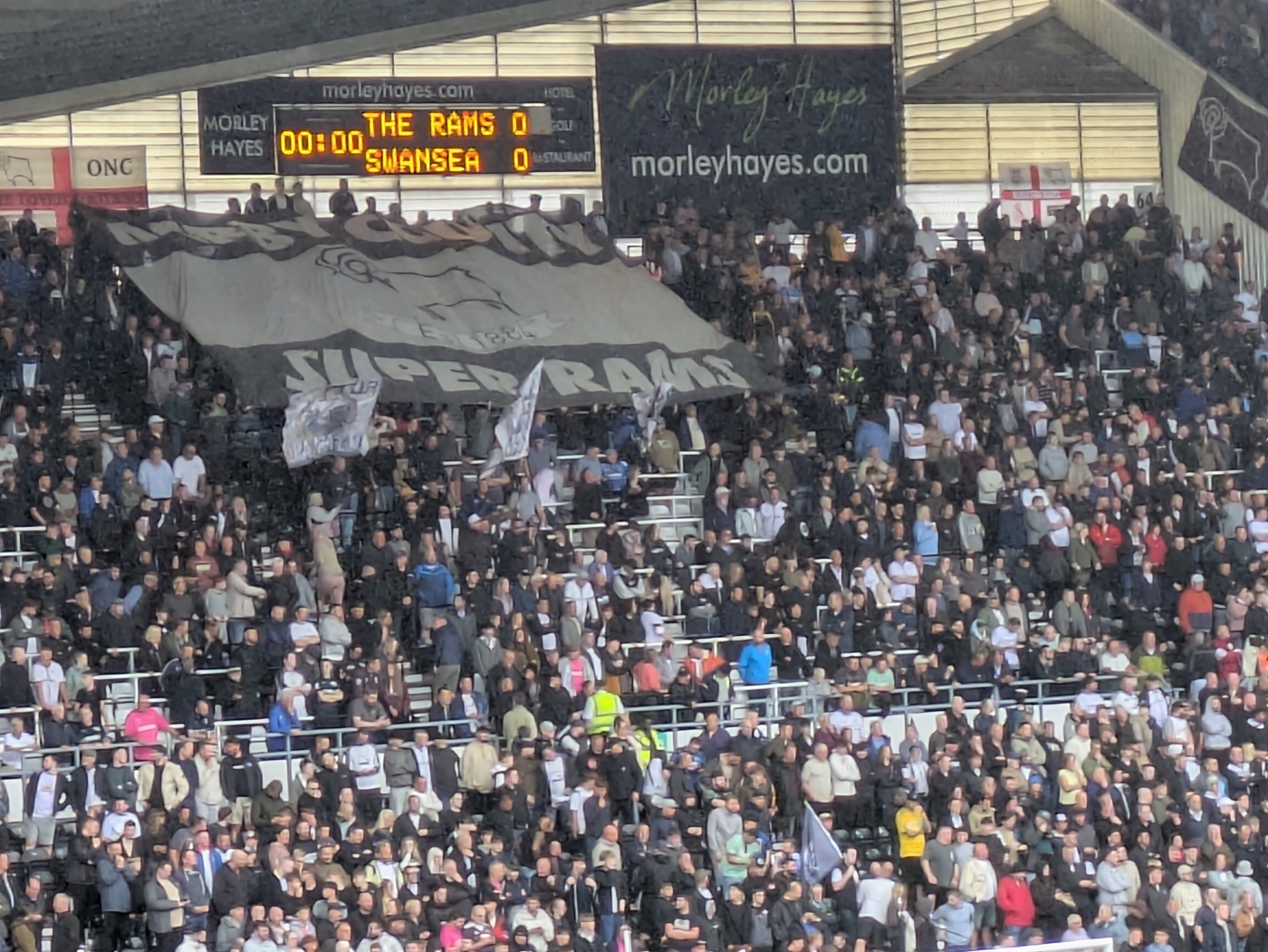
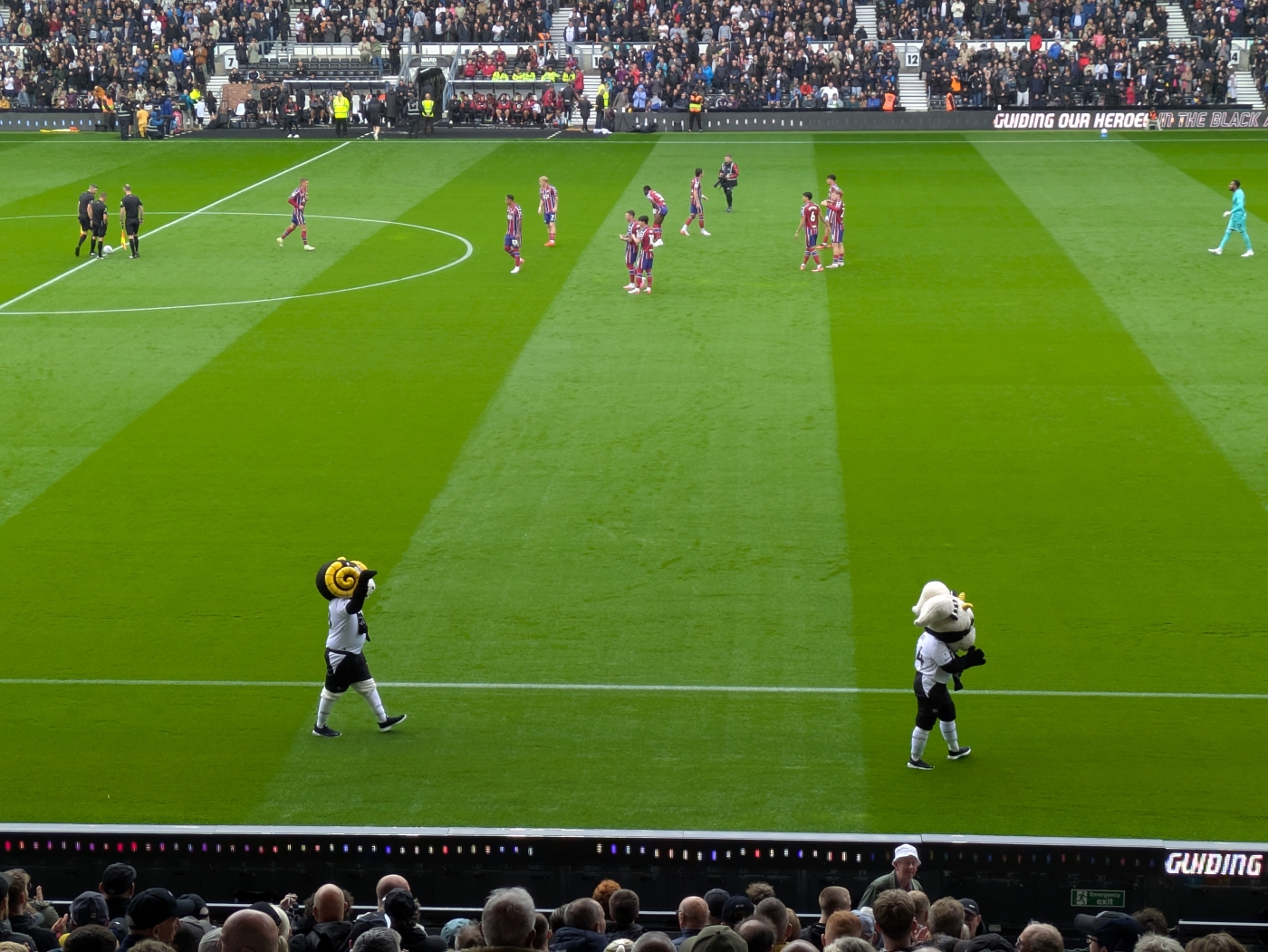
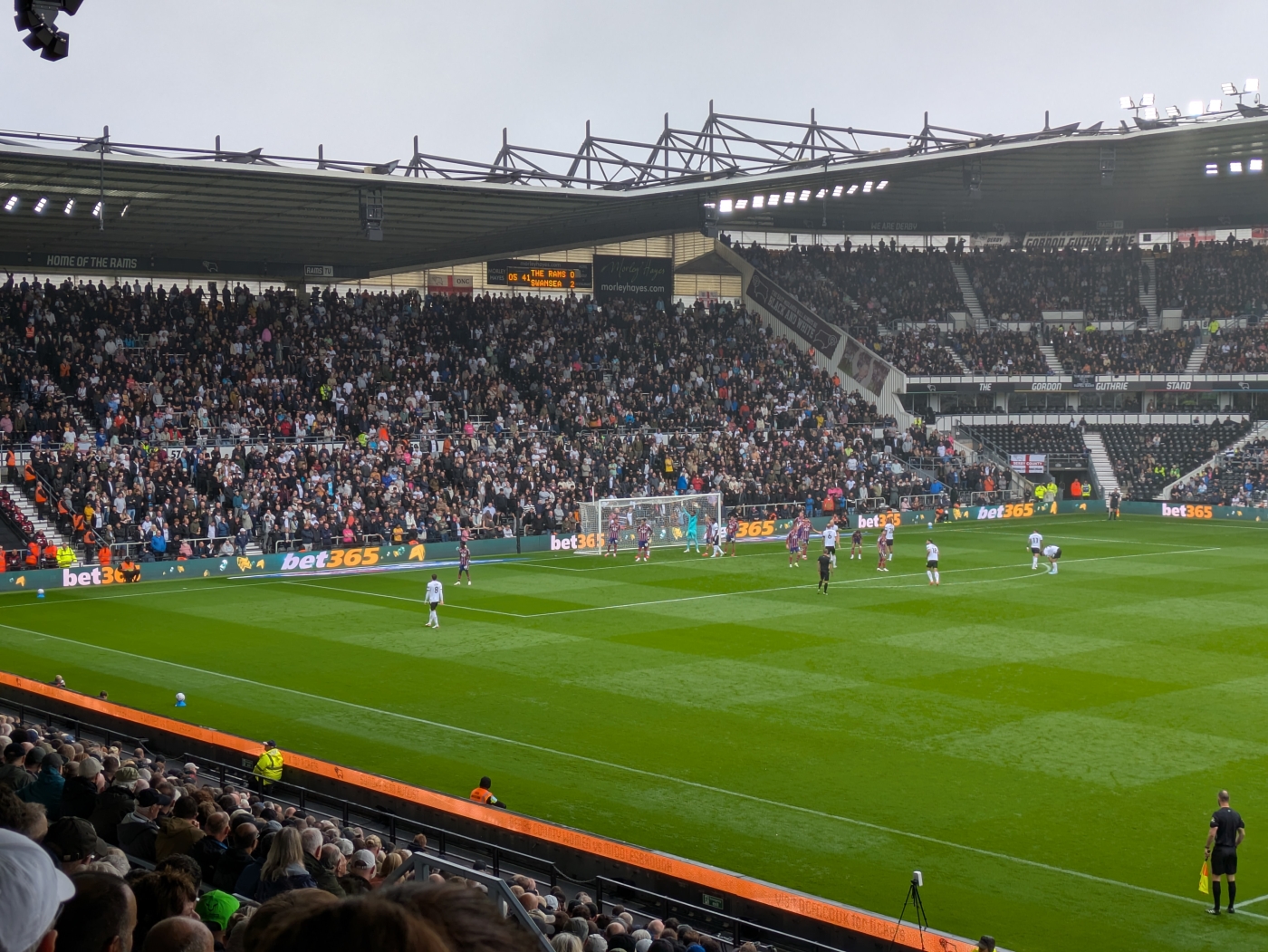
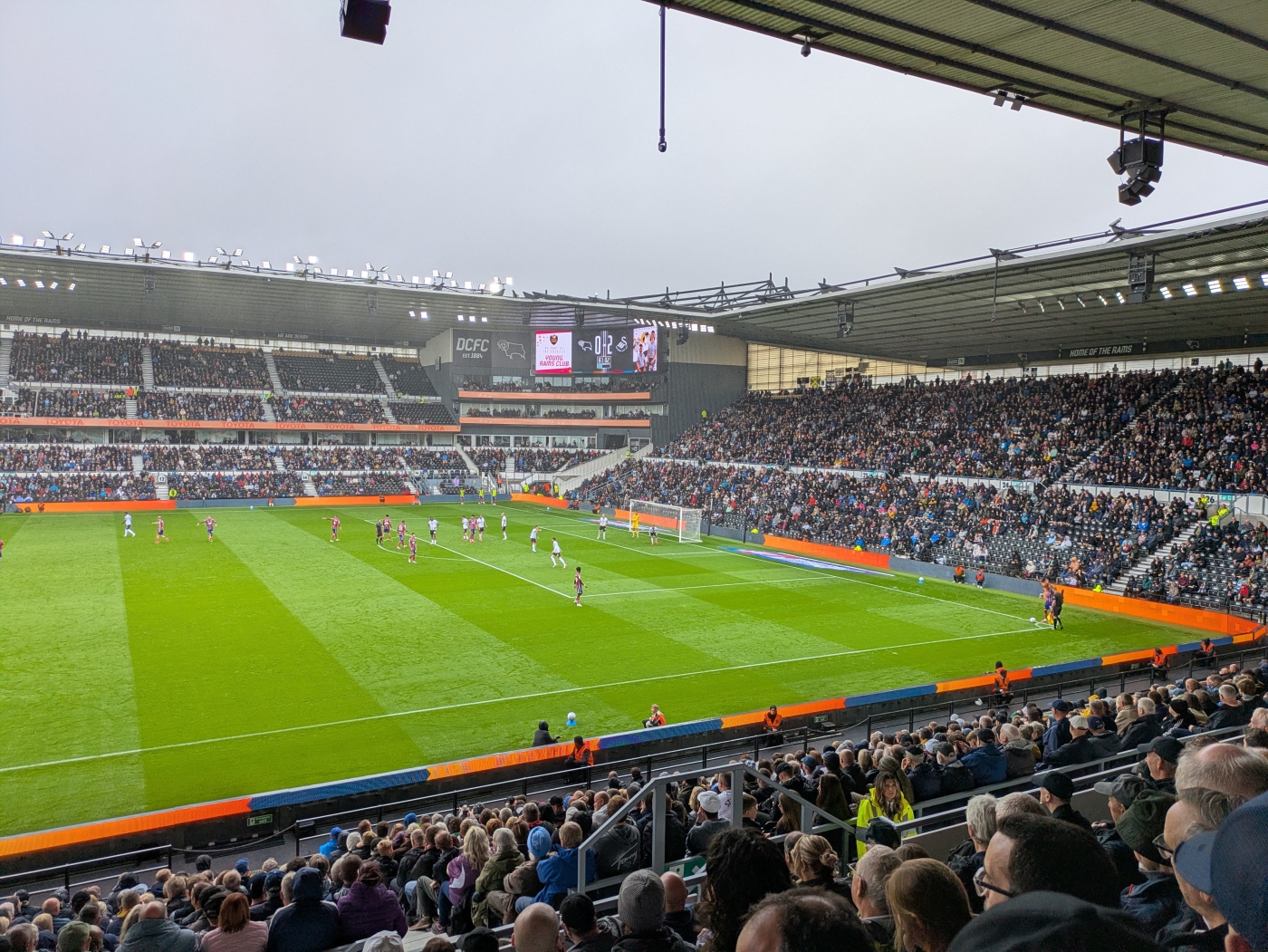
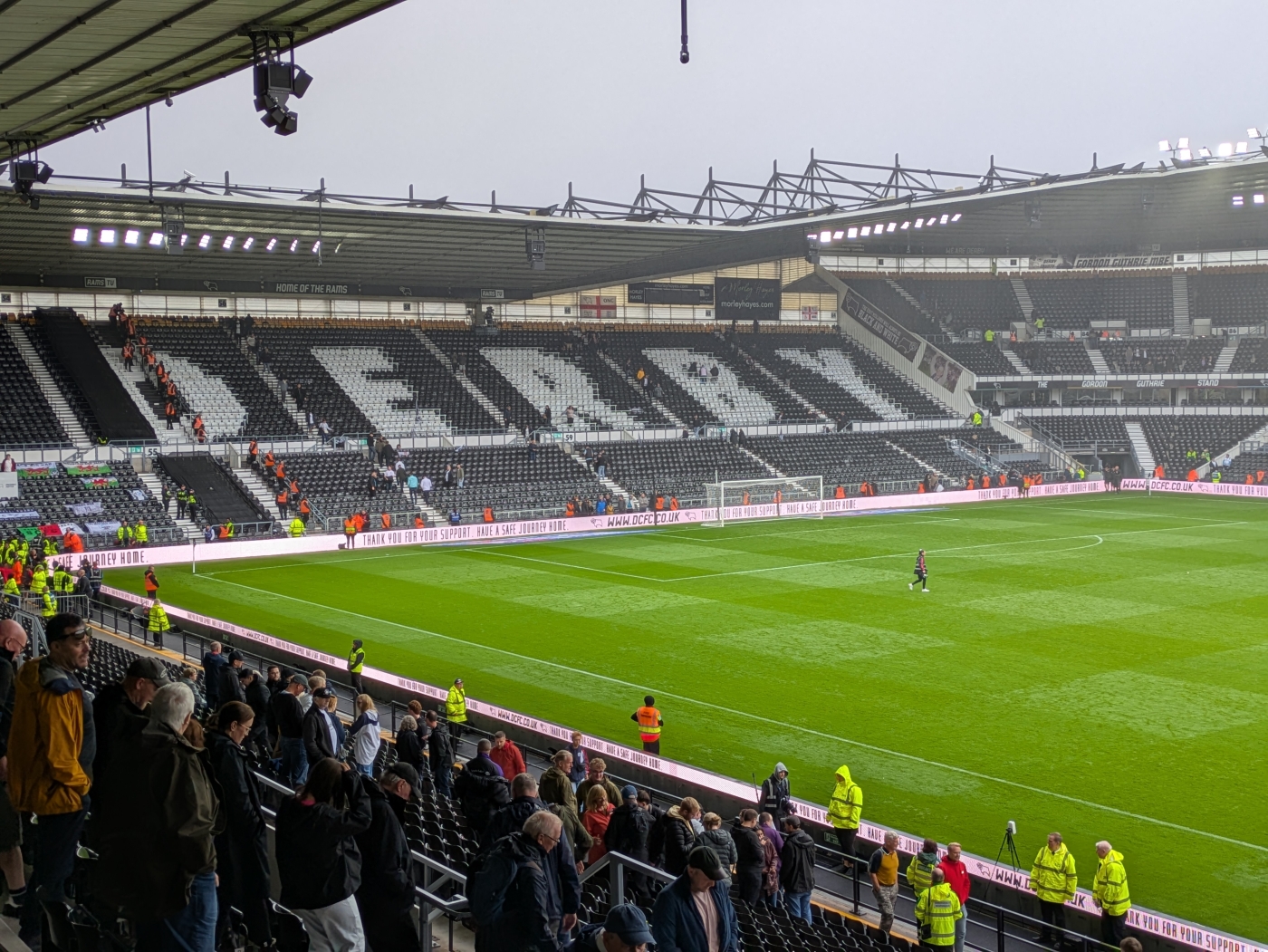
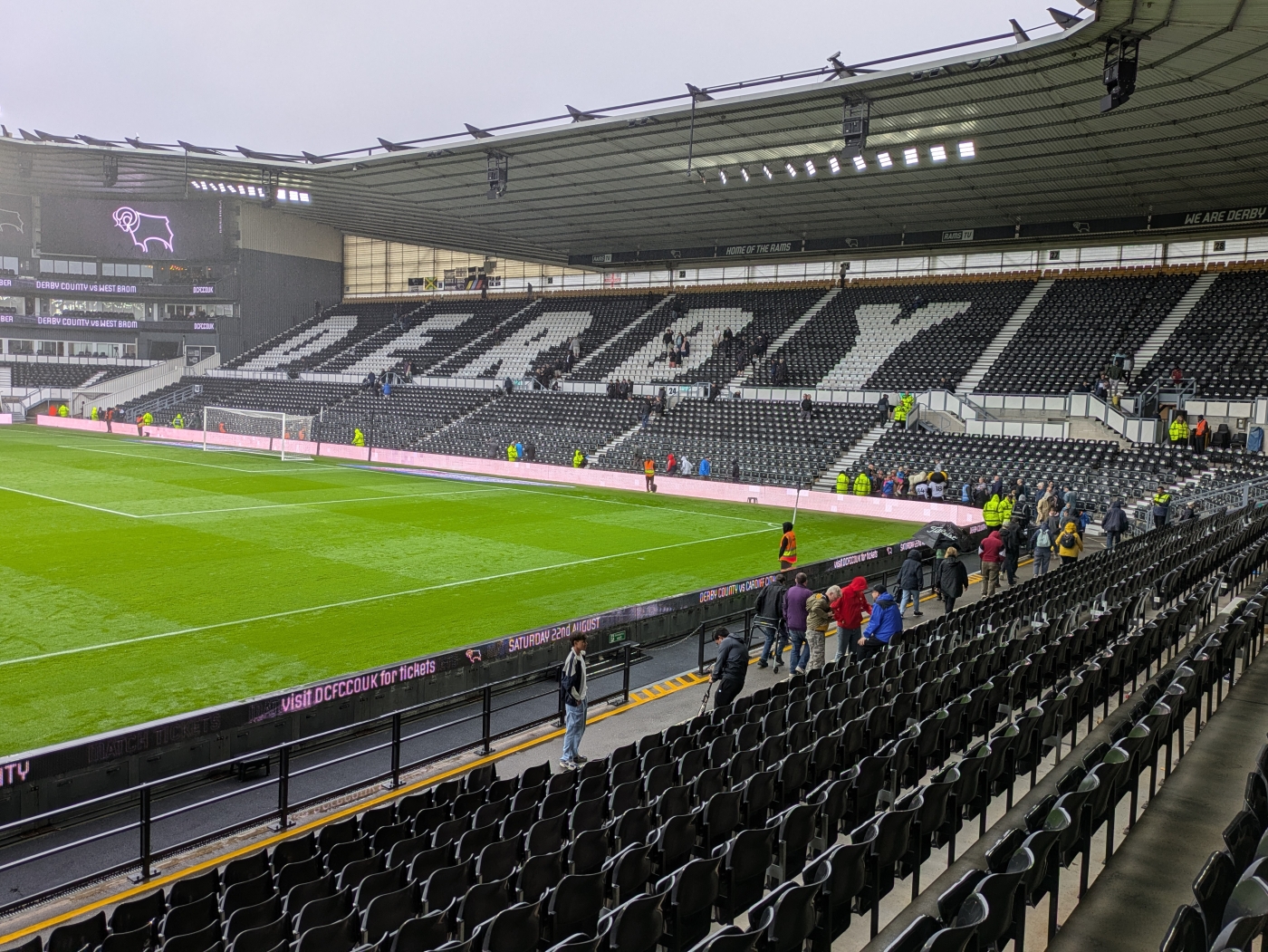
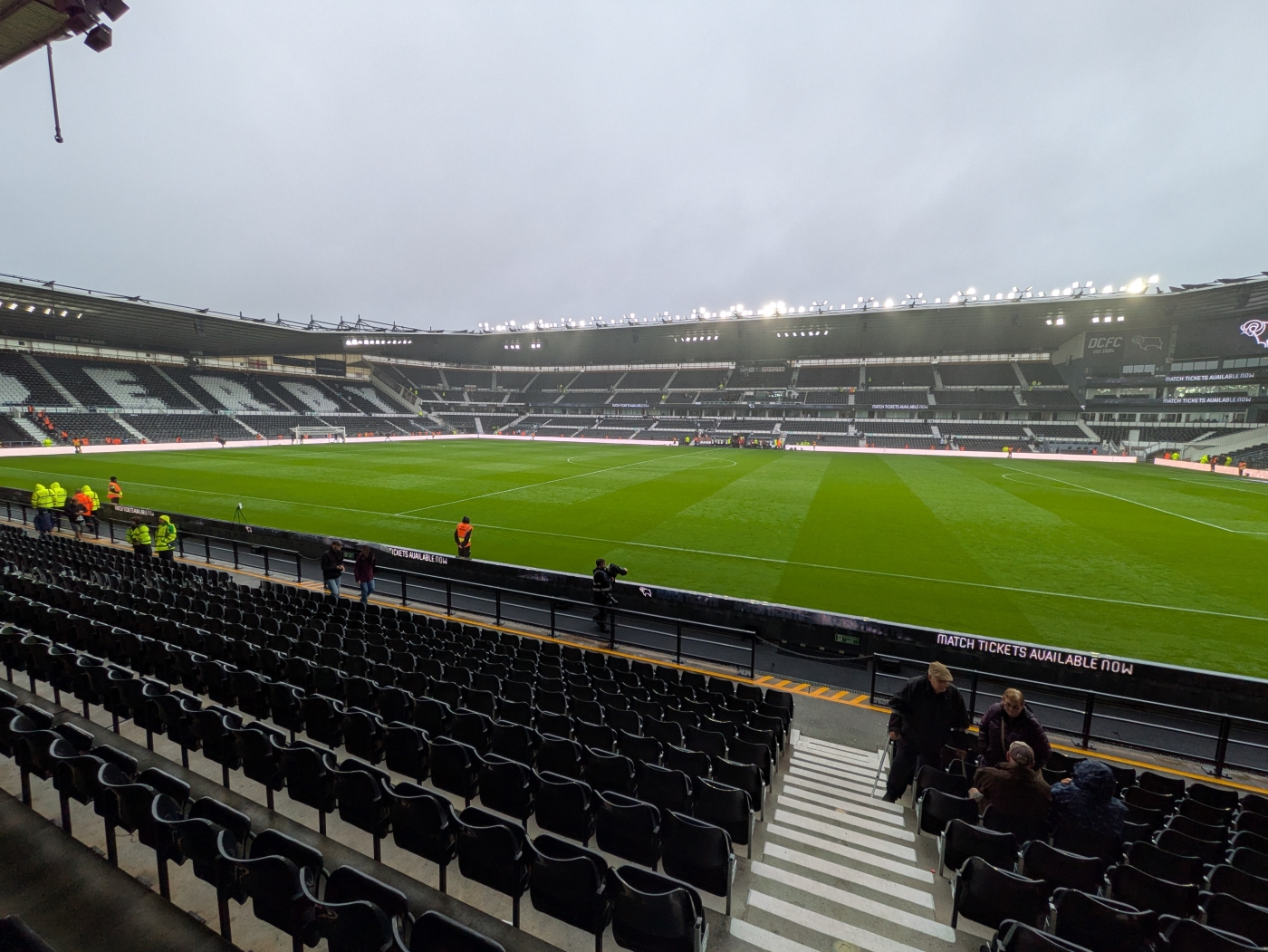
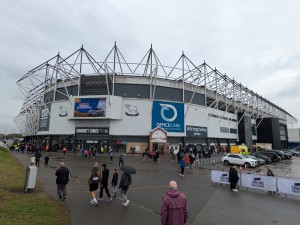
Pride Park Stadium is a good mix of classic British stadium architecture – with narrow, brick-faced entrances and access points – and a modern interior featuring contemporary catering facilities. All in all, a great stadium, which was well attended for this match too.
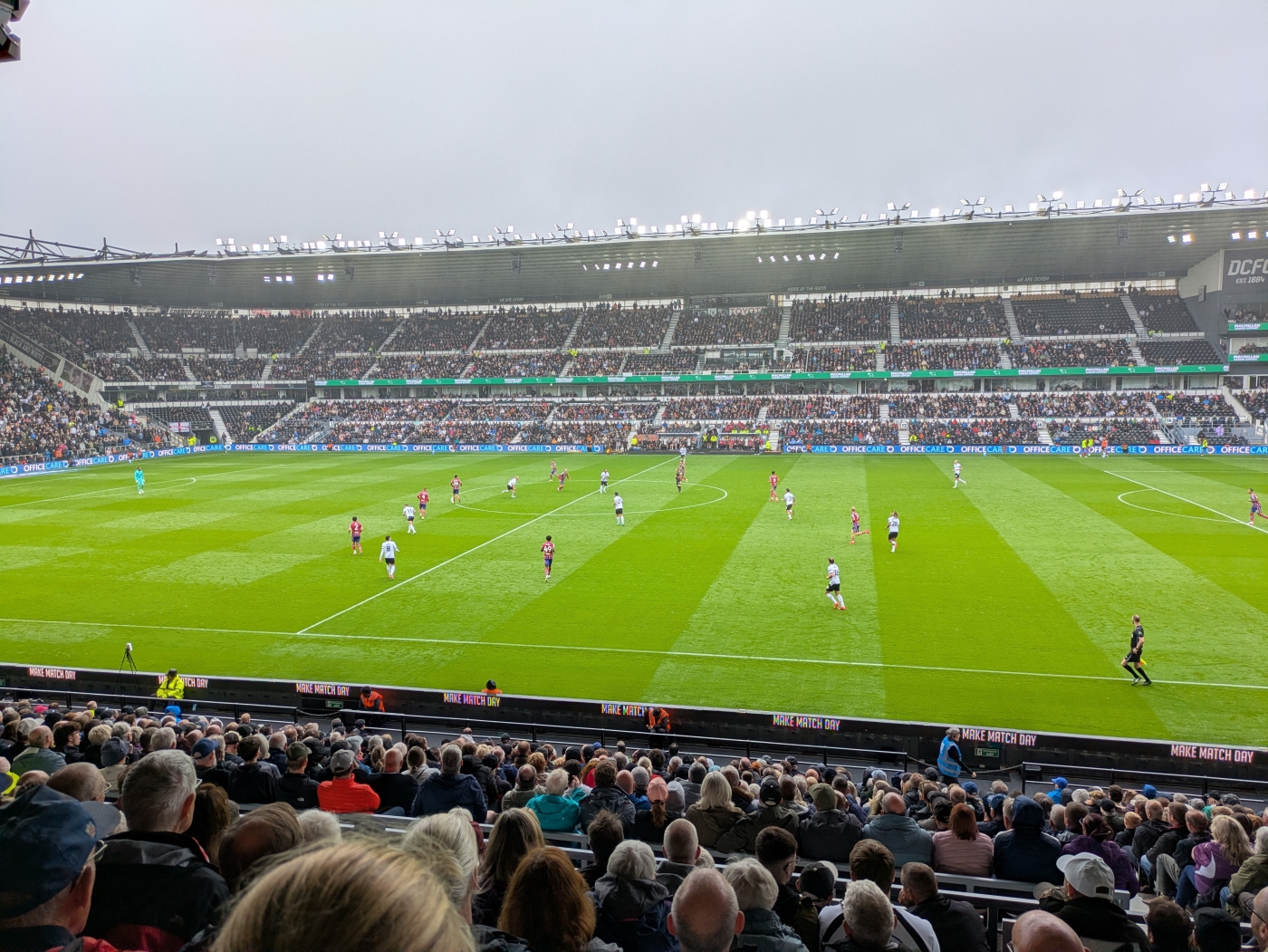
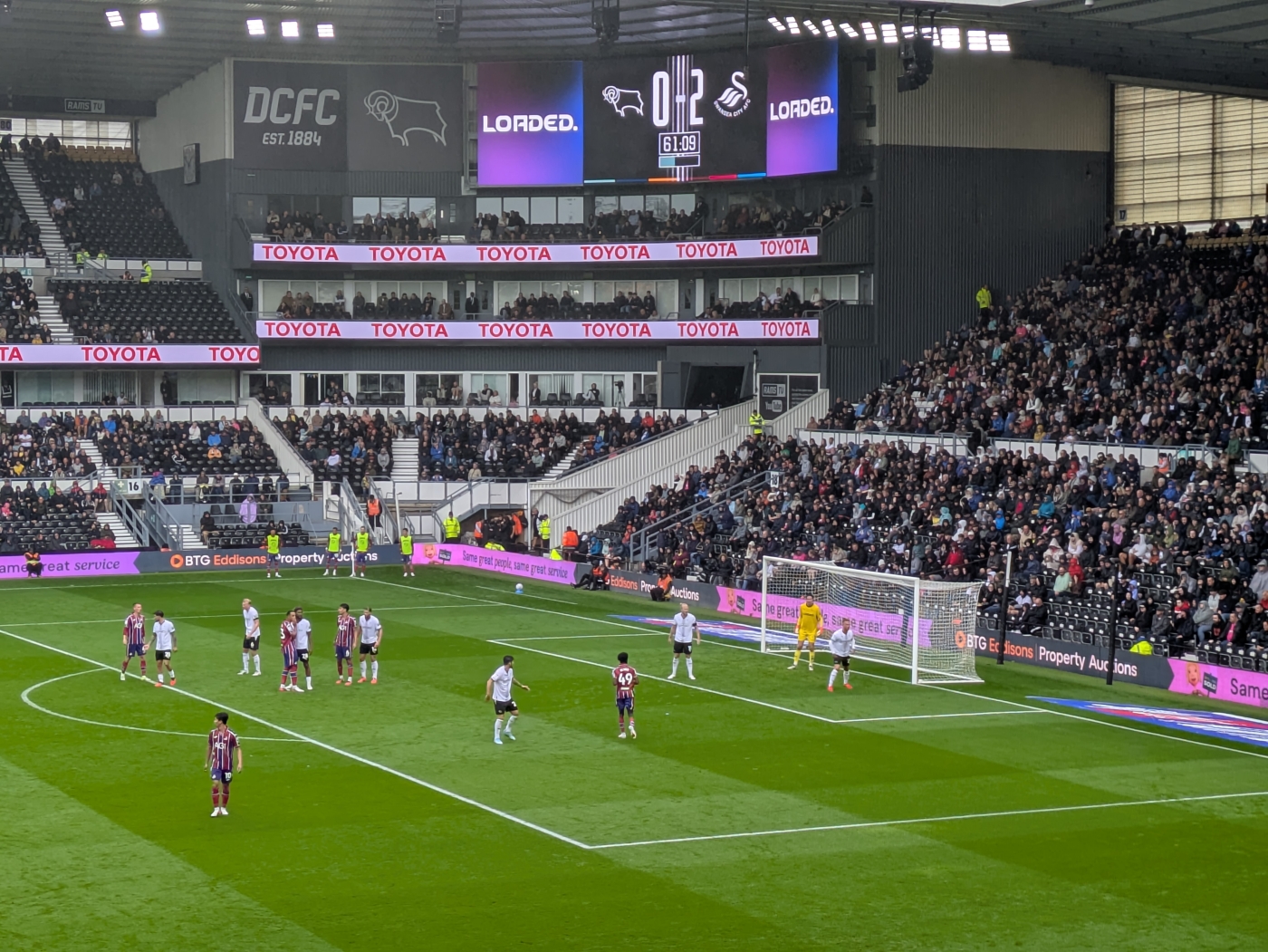
On paper, the match promised to be an exciting one, with last season’s 8th-placed side taking on the 11th-placed side. The match got off to a brisk start, with Derby scoring an early goal, which was, however, ruled out for offside. Yet this brief shock seemed to really rouse Swansea, as Joseph Opoku scored the opening goal for the visitors almost immediately afterwards following a counter-attack. After that, the game became a one-sided affair, with Derby struggling to stay in the match. Just as it looked as though they would go into half-time trailing by that narrow margin, Ji-sung Eom made it 2–0.
After the break, Derby enjoyed a brief spell where they were able to apply a bit more pressure, but they remained far too toothless in front of goal. Swansea were unable to seal the victory early on, but had no trouble defending their lead. It was only in stoppage time that Ronald put the final nail in the coffin of what had been a rather one-sided match with the 3–0, a result which the crowd acknowledged with the odd whistle or two.
Afterwards, in dry weather, we walked a somewhat longer way back into the city centre, where we visited the UNESCO World Heritage Site, the Derby Silk Mill, and the Museum of Making. Then the rain started again, and we spent the rest of the afternoon at “The Iron Ram” before catching the train back to London.