Udinese Calcio
Udine, Italy
About the Club:
In the northeastern reaches of Italy, nestled within the captivating region of Friuli-Venezia Giulia, lies the city of Udine, home to a football club known for its distinctive philosophy and rich history: Udinese Calcio. Fondly nicknamed "I Bianconeri" or "Le Zebrette" (The Little Zebras) due to their iconic black and white striped kits, Udinese represents a fascinating blend of tradition and modern football economics.
A Century of Stripes
The club's roots stretch back to 1896, making it one of Italy's oldest football institutions, though its official football section was established in 1911. While not achieving national league success on the scale of some of Italy's giants, Udinese did claim its first major honour in 1922, winning the Coppa Italia (then organized by the Italian Football Federation). The early decades saw the club oscillating between top divisions, establishing a reputation as a resilient and passionate side.
The Zico Era and Pozzo's Vision
One of the most glorious, albeit brief, periods in Udinese's history arrived in the early 1980s with the sensational signing of Brazilian legend Zico in 1983 from Flamengo. His arrival sent shockwaves through Italian football, proving that even a club from a smaller city could attract global superstars. While **Zico**'s two seasons didn't yield silverware, his exquisite skill and goal-scoring prowess cemented **Udinese**'s name on the international stage. Following this era, the club faced challenges, but would eventually find stability and a clear vision under the long-standing ownership of the Pozzo family, particularly Giampaolo Pozzo, who took over in 1986. The Pozzo stewardship has been instrumental in shaping the club's unique transfer model.
The Scouting Masterclass
Under the Pozzo family, Udinese became renowned for its exceptional worldwide scouting network and its ability to identify, nurture, and develop raw talent into world-class players, often selling them on for significant profit. This philosophy has seen a remarkable parade of future stars pass through the Stadio Friuli (now officially the Bluenergy Stadium). Players like **Alexis Sánchez** (who later moved to **Barcelona**), **David Pizarro**, goal-scoring phenomenon **Vincenzo Iaquinta**, and goalkeeping giant **Samir Handanović** all honed their skills in Udine before achieving greater fame. The club's all-time top scorer, the legendary striker Antonio Di Natale, epitomized loyalty, spending over a decade with the club and achieving personal brilliance.
Modern Day Friulani
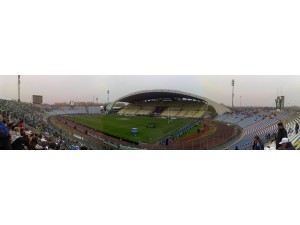
Today, Udinese Calcio continues to operate with its characteristic blend of pragmatic financial management and a commitment to competitive football. They remain a consistent presence in Serie A, captivating fans with their attacking flair and the continuous emergence of new talents. The club’s home, the impressive Bluenergy Stadium, inaugurated in 1976 and extensively renovated, offers a modern arena for the faithful Friulani supporters to cheer on their beloved "Zebrette" as they strive for future successes.
Links and Social Media:
stadium: